
The utilization of solid Hazardous and Toxic Waste (B3) to produce aluminum ingots is a processing method aimed at recovering aluminum content from materials that meet the technical requirements for reuse. This process involves a series of planned stages, prioritizing workplace safety, material utilization efficiency, and environmental protection.
**The first stage is waste receipt and inspection.** Solid B3 waste containing aluminum is received and inspected based on its type, characteristics, and suitability regarding the raw material requirements for the utilization process. Subsequently, the material is sorted to remove unsuitable components and ensure that the material to be processed meets operational criteria.
**The second stage is raw material preparation.** The sorted material undergoes preparation based on its characteristics, including the removal of impurities and the handling of contaminants where necessary. This stage aims to facilitate a smooth smelting process and maintain the quality of the resulting aluminum product.
**The third stage is the smelting process.** Material meeting the requirements is charged into the smelting furnace following appropriate operational procedures. At this stage, the aluminum is melted under controlled conditions until it reaches a molten state. Equipment operation incorporates emission controls and safety procedures to minimize risks to workers and the environment.
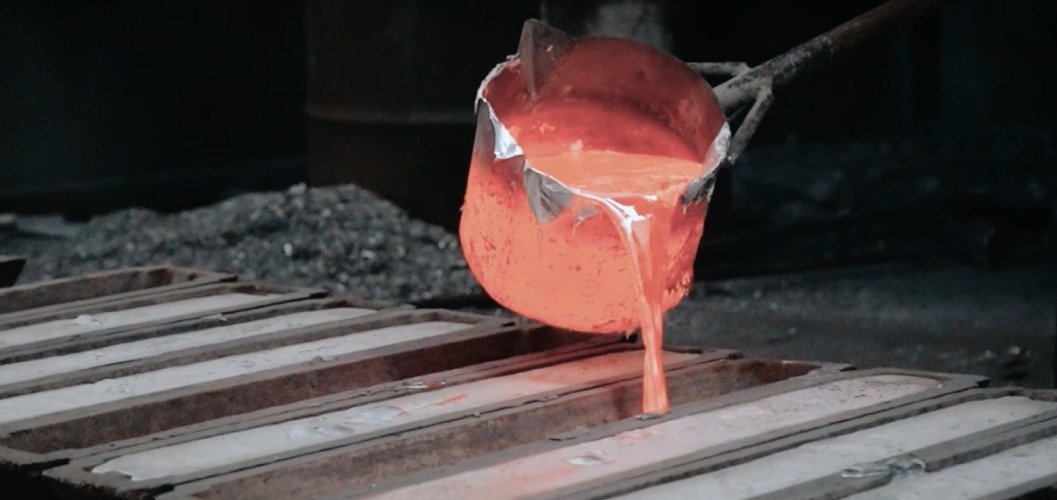
**The fourth stage is aluminum ingot casting.** Molten aluminum that meets process criteria is poured into specialized molds to form aluminum ingots. After cooling and solidification, the resulting ingots undergo quality inspection against established specifications.
**The fifth stage is residue management and environmental control.** Dross, material remnants, dust, and other residues generated during the smelting process are handled according to their characteristics and managed in compliance with applicable regulations. Emission controls, activity logging, and operational monitoring are implemented as part of responsible environmental management. Through a controlled utilization process, solid hazardous and toxic waste (B3) meeting the required specifications can be processed into aluminum ingots with the potential for use as industrial raw material. This activity supports material value recovery, resource optimization, and the implementation of environmentally sound waste management principles, in accordance with applicable permits and regulatory requirements.
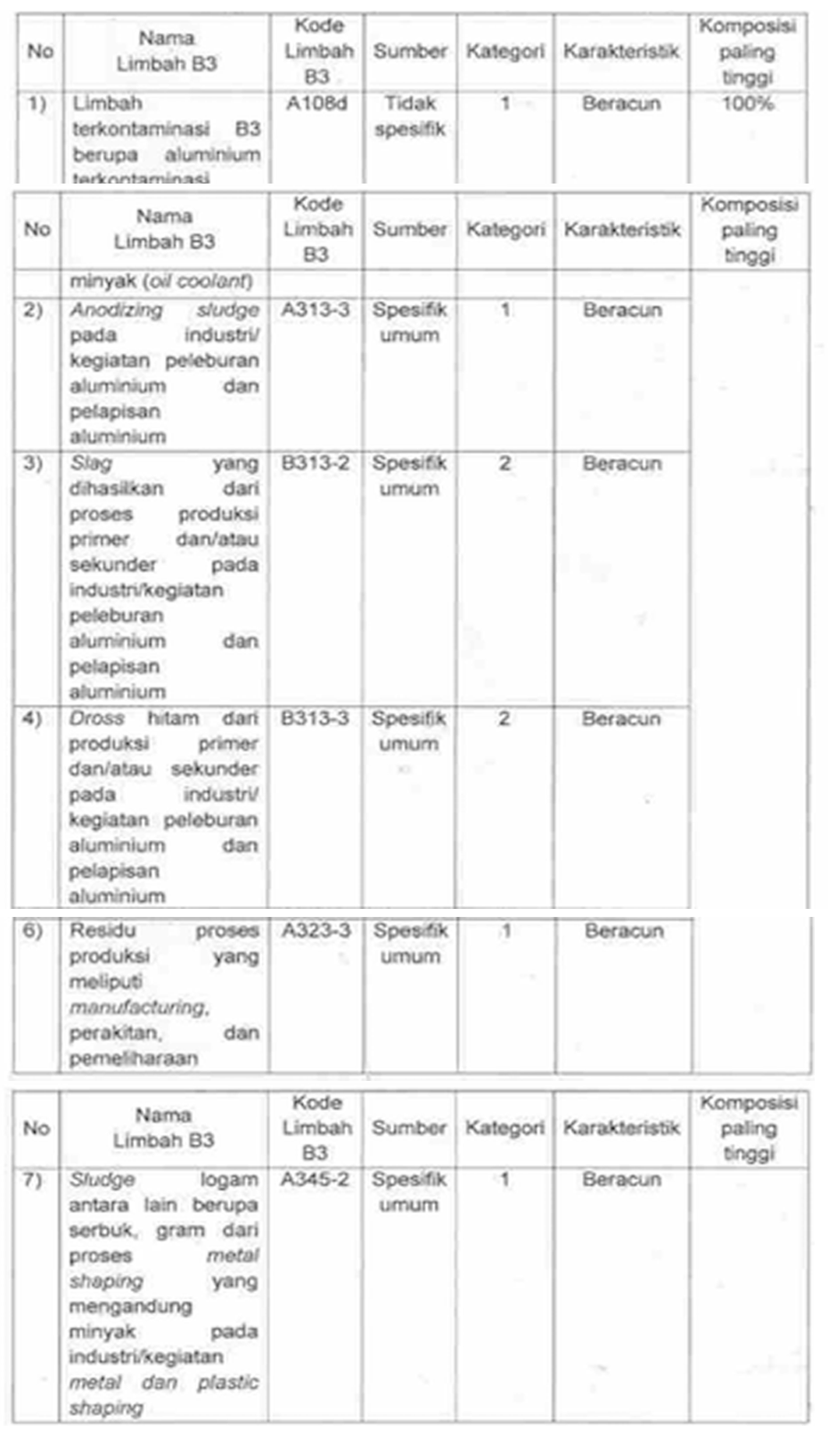
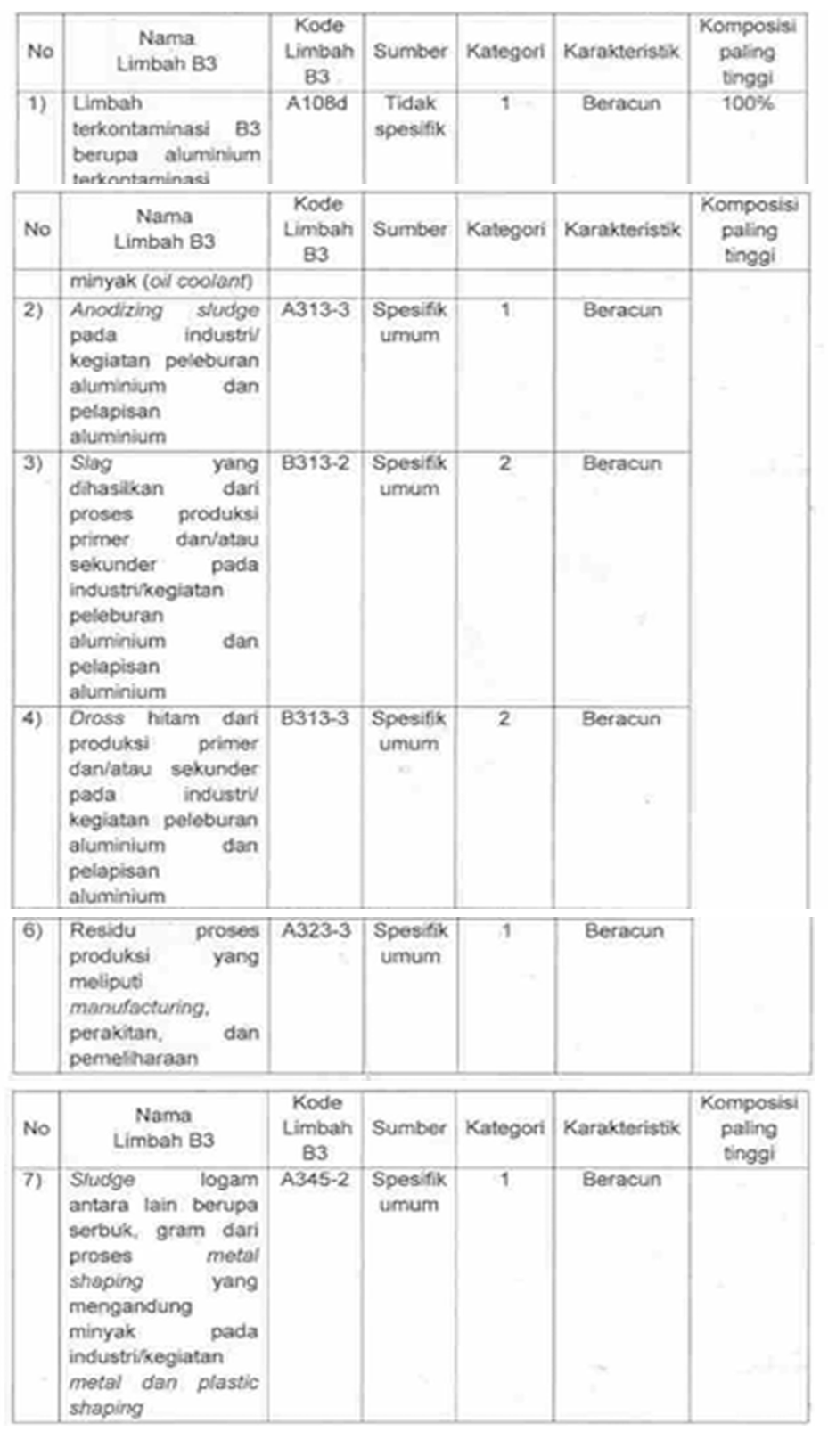
Following are the types and codes of waste to be recyled :
Results of Utilizing Ingot/Aluminum Waste: